The More You Punish, The Longer It Takes: Why Your Puppy Is Still Not Trained
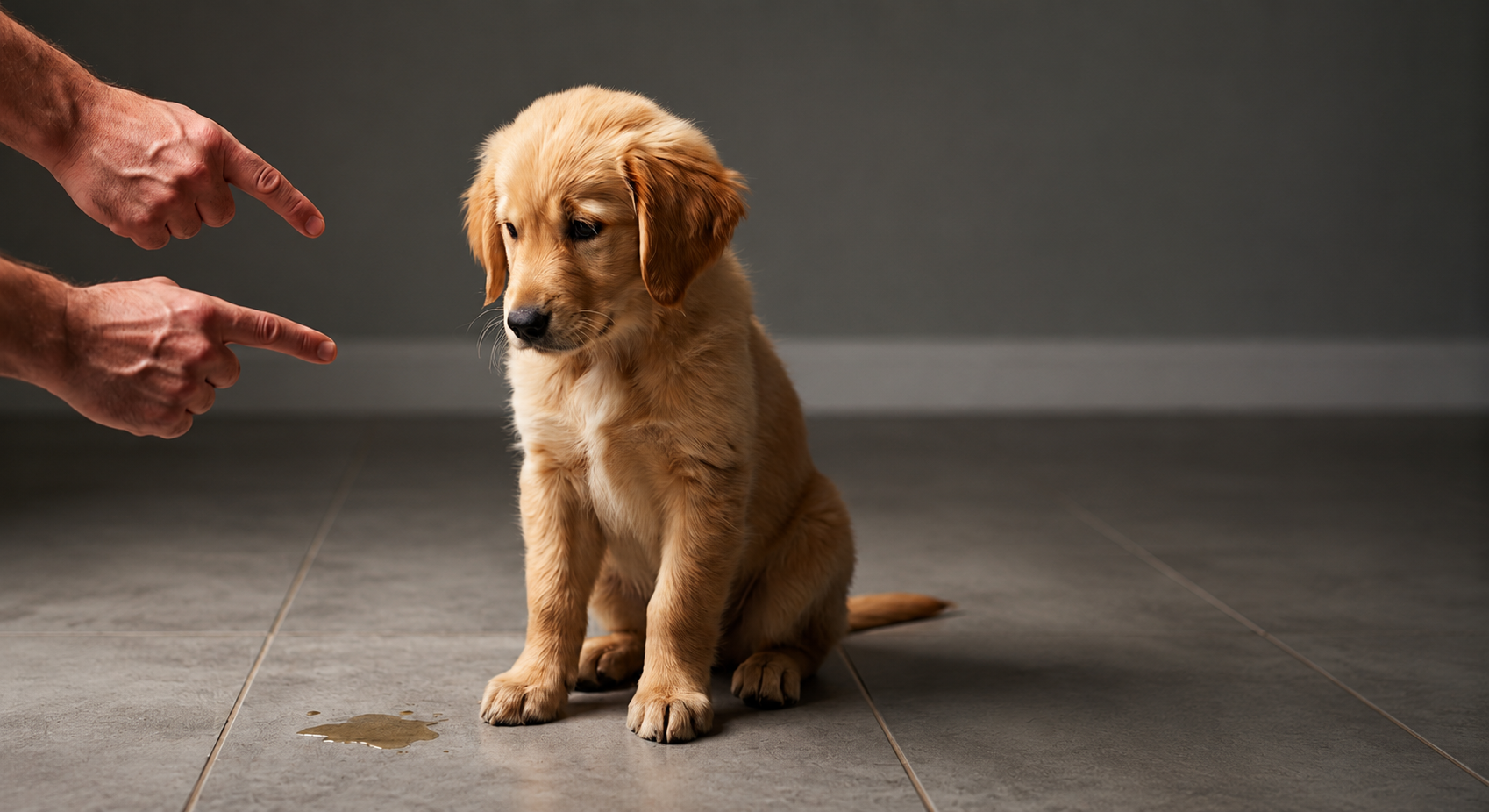
This moment — however understandable — is actively setting your training back.
After six weeks of accidents, David was at his limit. His 4-month-old French Bulldog, Milo, seemed to understand everything except where to pee. David had tried a schedule, he’d tried treats, he’d tried crate training — and when none of it seemed to work fast enough, he started getting firmer. He raised his voice. He held Milo’s face near the mess. He tapped his nose.
Milo’s response was immediate and unmistakable: he started hiding. Accidents moved from the open living room floor to behind the couch, under the bed, deep in a closet corner. David had to hunt for them daily. Milo also became reluctant to approach David at all after a cleanup — he’d slink away whenever David picked up the cleaning spray, even when no accident had occurred.
A dog trainer looked at the situation and told David something that stopped him cold: “You’ve trained Milo perfectly. He’s learned exactly what you’ve been teaching him — that accidents near you lead to scary things. So he hides them. The behavior you wanted to stop, you’ve made invisible. That’s not progress.”
David reset everything. Neutral cleanup, consistent schedule, enthusiastic outdoor rewards. Milo was reliable in 11 days. Six weeks of punishment had produced zero progress. Eleven days of the right approach produced a trained dog.
Why Punishment Actively Delays Potty Training Progress
This isn’t a matter of opinion or training philosophy — it’s behavioral science. Punishment-based responses to potty accidents set off a chain of consequences that each independently slow down the training process.
The 4 Ways Punishment Slows Potty Training
| # | What Punishment Does | How It Delays Training |
|---|---|---|
| 1 | Creates fear around elimination near humans | Dog hides accidents instead of eliminating in designated spot |
| 2 | Raises cortisol (stress hormone) | Stressed dogs learn more slowly — cortisol literally impairs memory formation |
| 3 | Suppresses signaling behavior | Dog stops going to the door or signaling because signals previously led to scary outcomes |
| 4 | Damages human-dog trust | Training relies on the dog following human guidance — fear erodes that cooperative relationship |
Our program is built entirely on positive, science-backed methods. No punishment, no setbacks, no hidden accidents — just a clear daily plan that actually works.
✅ Works for all breeds · Puppies and adult dogs · Instant access
The Reset Method: How to Undo Punishment Damage and Start Progressing Again
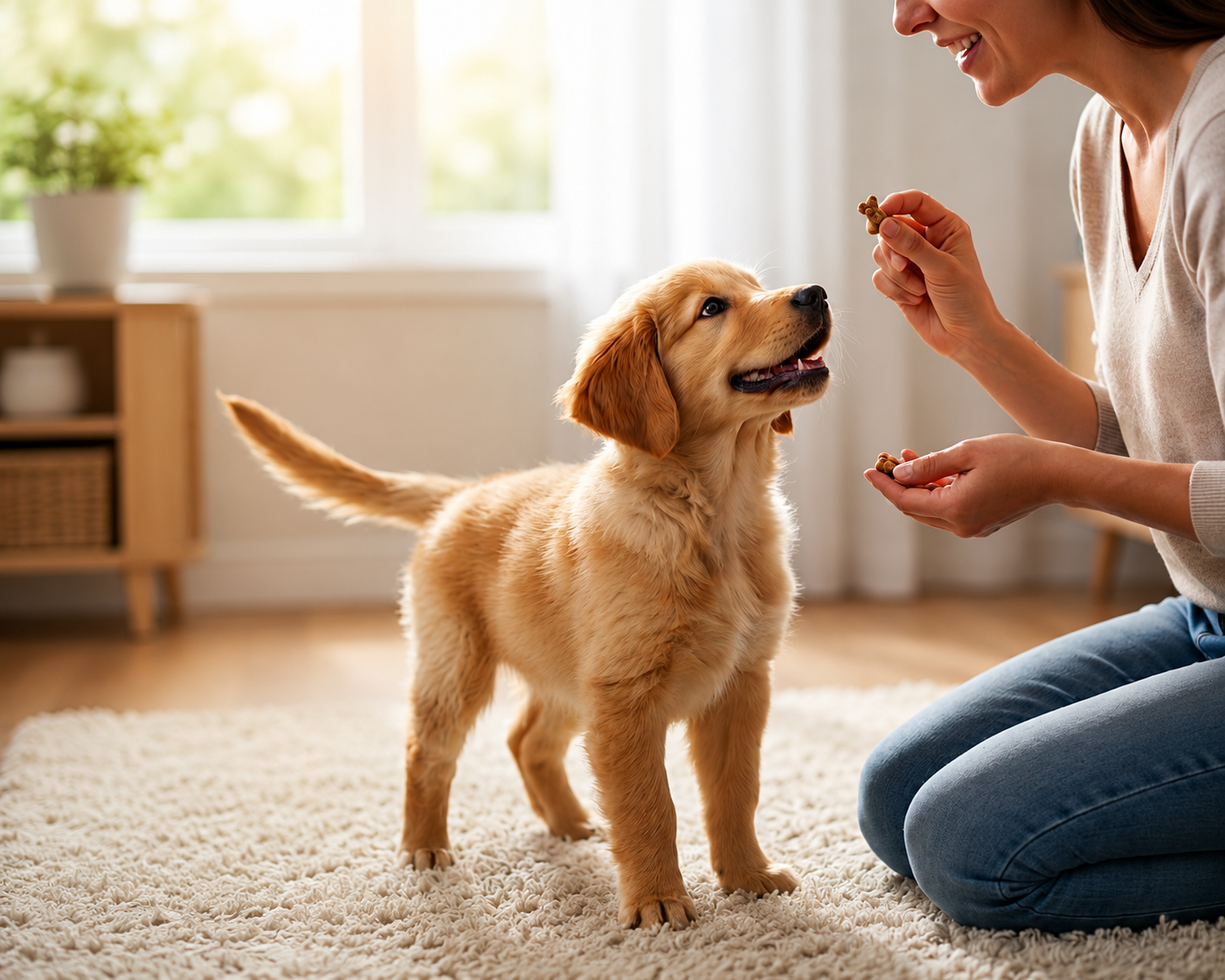
This is what actually builds the habit — calm, immediate, consistent positive reinforcement.
If punishment has been part of your training — even occasionally — your dog needs a deliberate reset before new training can be effective. Trying to add positive reinforcement on top of an existing fear response doesn’t cancel the fear. You need to address the anxiety first.
This means no raised voice, no stiff body language, no sighing heavily near accidents, no extended eye contact after discovering a mess. Your dog reads your emotional state precisely — even a tense posture near a cleanup can reinforce the fear response.
Before resuming active training, spend a few days simply being calm, positive, and predictable around your dog regardless of what happens with accidents. This begins to separate you from the fear association that punishment created.
If your dog has been hiding accidents, they’re still happening — you’re just not finding them. Check every hidden corner, under furniture, in closets, with a UV blacklight if possible. Clean every spot with enzymatic cleaner to remove all scent triggers.
Reset your dog’s indoor freedom completely: leash indoors, crate when unsupervised, structured schedule with no gaps. Treat every outdoor success like the first time — maximum enthusiasm, immediate treat, genuine praise.
Use your highest-value treat for every single outdoor success for the first week of reset training. This intensive positive phase rapidly rebuilds the neural pathway between “going outside” and “great things happen” — replacing the old anxiety pathway.
🎬 Watch how to apply the reset method step by step — including what to do in the first 48 hours:
Punishment vs. Positive Training: The Real-World Comparison
❌ With Punishment
- Dog hides accidents in unreachable spots
- Signaling behavior suppressed or absent
- Training timeline: 3–6+ months with persistent issues
- Dog shows anxiety around owner during cleanup
- Accidents become invisible — not eliminated
- Stress hormones impair new learning
- Trust eroded — cooperative training harder
✅ With Positive Reinforcement
- Dog accidents remain visible and catchable
- Signaling behavior develops and strengthens
- Training timeline: 2–6 weeks typical
- Dog remains comfortable and connected with owner
- Accidents decrease measurably week by week
- Calm state supports faster learning
- Trust builds — dog actively seeks guidance
How to Potty Train Your Dog Quickly After Dropping Punishment
The moment you remove punishment from the equation, the remaining elements of effective training start working faster. Here’s the structure that produces the quickest results:
- Fixed schedule with no gaps — out after waking, after meals, after play, before bed, and every 2 hours in between for young puppies
- Reward within 3 seconds of outdoor success — treat plus genuine enthusiastic praise, every single time, without exception
- Neutral, silent cleanup indoors — enzymatic cleaner, no reaction, no comment, no fuss
- Crate or supervision for unsupervised time — zero unsupervised roaming until trust is fully established
- React to every signal immediately — any sniffing, circling, or door-approaching gets an instant response
How to Stop Your Dog from Peeing in the House Without Punishment
Every indoor accident has a preventable cause. Instead of reacting after the accident, redirect your energy to eliminating the conditions that allow accidents to happen:
| Accident Cause | Prevention (Not Punishment) |
|---|---|
| Schedule gap — interval too long | Shorten interval by 30 minutes; reassess after 3 accident-free days |
| Missed post-meal trip | Set phone alarm 15 minutes after every meal — non-negotiable |
| Unsupervised roaming | Leash indoors or crate until training is reliable |
| Scent residue from old accidents | Full enzymatic clean of every known and suspected spot |
| Missed signal | Keep dog in eyeline at all times during early training |
Indoor Potty Training for Small Dogs: Why Punishment Hits Harder
Small breeds are more emotionally sensitive than large breeds — a single punishment event can have a lasting impact on a Chihuahua or Maltese that would barely affect a Labrador. This makes dropping punishment even more critical for small dog owners.
If you’ve punished a small dog for accidents, watch specifically for: refusing to go near the designated indoor pad, eliminating in very hidden spots, or showing submissive posturing whenever you approach with cleaning supplies. These are signs that the fear response is active and the reset needs to be prioritized before training can resume.
Potty Training an 8-Month-Old Dog After Punishment: Is It Too Late?
It is never too late — but it does require more time and intentionality the longer punishment-based training has continued. An 8-month-old dog that has been punished for several months has formed stronger fear associations than a puppy punished for a few weeks. The reset process is the same, but expect it to take slightly longer — typically 2–3 weeks before you see significant, consistent improvement.
Golden Retriever Potty Training: The Most Punishment-Sensitive Breed
Golden Retrievers are one of the breeds most emotionally affected by punishment during training. Their deep need for owner approval means that a single significant punishment event can undermine weeks of positive progress. If you have a Golden and have used punishment, prioritize the emotional reset above all else — a Golden that’s anxious around you cannot be trained effectively regardless of how good your schedule and rewards are.
Frequently Asked Questions
The 7-Day Potty Training Program gives you the exact positive approach — from day-one reset through full reliability — with no punishment, no setbacks, and clear daily steps.
🎯 Get the Full 7-Day Program Now
✅ Instant access · All breeds · Puppies to adults · Science-backed