Potty Training During Winter: What to Do When Your Dog Refuses to Go Outside
Jessica got her 10-week-old French Bulldog, Pierre, in late October. The first two weeks of training went well — Pierre was responding to the schedule, taking treats reliably, and accidents were already declining. Then November hit. The temperature dropped, rain became constant, and Pierre discovered that he had a strong preference for staying warm and dry.
He started refusing to go outside at all. He’d stand at the door, feel the cold air, and immediately back away. If Jessica carried him outside, he’d shiver visibly, hold everything, and the moment he was back inside he’d pee on the floor. By week three of winter, Pierre was having more accidents than he had in week one of training. Jessica was devastated. “I thought I’d broken him,” she said.
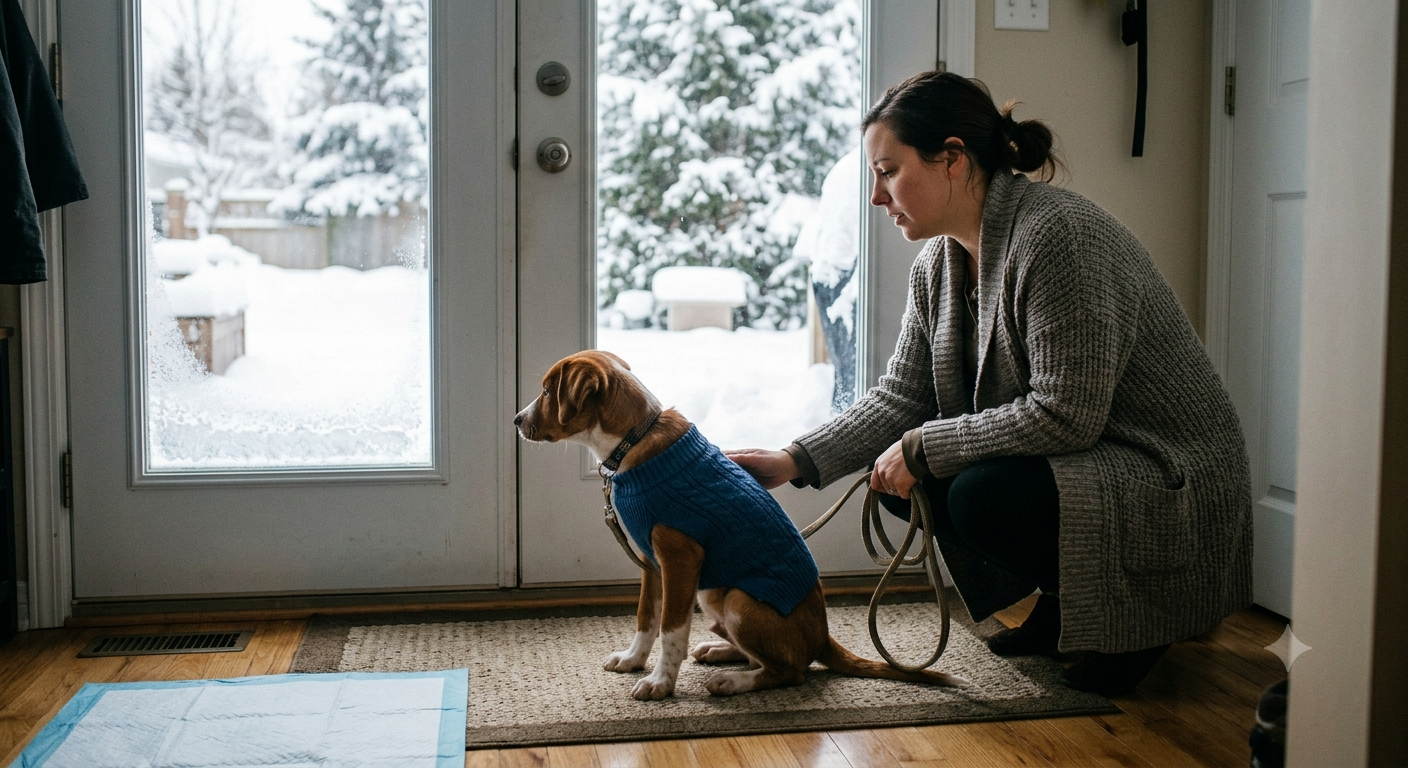
A trainer visited and made three changes: a small dog coat for outdoor trips, a covered outdoor potty area (a simple plastic shelter from a garden store placed over Pierre’s designated spot), and an indoor grass pad for emergencies during extreme weather. The trainer also reduced the length of outdoor trips but increased their frequency — shorter but more often, so Pierre never had to endure long cold exposure.
Within a week, Pierre was going outside reliably again. He still wasn’t thrilled about winter — but the cold was no longer an insurmountable obstacle. “I didn’t know dogs needed coats for potty training,” Jessica said. “I thought that was just a fashion thing.”
Why Dogs Refuse to Go Outside in Winter: The Real Reasons
Cold paw sensitivity
Dog paws are sensitive to cold surfaces, ice, and road salt. A puppy standing on freezing pavement experiences real discomfort that overrides the training association. Small breeds feel this more intensely than large breeds.
Rain and wet fur aversion
Most dogs dislike getting wet — especially on cold days when wet fur causes rapid heat loss. Short-coated breeds and small dogs are particularly sensitive to rain combined with cold temperatures.
Cold air shock at the door
The sudden transition from warm indoor air to cold outdoor air is unpleasant enough that many puppies learn to turn back at the threshold rather than continuing outside. This refusal strengthens every time the puppy successfully avoids going out.
Scent signals buried under snow
Snow covers the familiar scent markers at the designated outdoor potty spot — removing the classical conditioning trigger that normally accelerates outdoor elimination. Without the scent signal, the urge to go in that specific location is weakened.
Road salt and chemical irritants
Road salt and winter de-icing chemicals are paw irritants that cause real pain on contact. A puppy that has experienced paw irritation from salt will be reluctant to step onto treated surfaces.
Shortened daylight affecting schedule
Winter’s reduced daylight hours change the household routine in ways that create schedule gaps — later mornings, shorter outdoor time, and owners less willing to stand outside in the dark and cold create ideal conditions for indoor accidents.
Our 7-Day Program works in any season — including winter-specific adaptations for cold weather, rain, and dogs that refuse outdoor trips.
✅ All breeds · All seasons · Instant access
The Winter Potty Training Protocol: 7 Steps That Work Complete Fix
A properly fitted dog coat significantly reduces cold-related outdoor refusal — especially for short-coated breeds, small dogs, and puppies under 4 months. The coat should cover the torso and be easy to put on quickly. Put it on every time before going outside, so your dog associates the coat with outdoor trips. Within a week, the coat itself becomes a cue that a potty trip is happening.
A simple plastic lean-to shelter, garden awning, or covered porch area over the designated potty spot eliminates rain exposure entirely and reduces wind chill significantly. This single change resolves most rain-refusal issues within 2–3 days. The spot still smells familiar and the dog doesn’t get wet — two of the biggest winter barriers removed at once.
Clear the spot as soon as snow falls — before your dog’s next trip. Expose the familiar ground surface and, if possible, place a small amount of previously used substrate (a paper towel with your dog’s scent) on the cleared area to restore the scent trigger that snow buried. Your dog will locate the familiar smell and the classical association reactivates.
Dog boots prevent paw contact with road salt and ice entirely. If your dog resists boots, paw wax (applied before each trip) creates a protective barrier against salt irritation. Clean and check paws after every winter trip — salt irritation is cumulative and can create lasting paw sensitivity that extends well beyond winter.
Winter outdoor trips require more motivation than summer ones because the dog is overcoming real discomfort. Upgrade your reward to the highest-value treat available during winter training — cooked chicken, cheese, or freeze-dried liver. The greater the discomfort overcome, the greater the reward needed to build and maintain the positive association.
Instead of waiting 5–10 minutes at the spot per trip, aim for 3–5 minutes but take more frequent trips. Your dog can tolerate brief cold exposure much more readily than prolonged exposure. Shorter, more frequent trips maintain the schedule without requiring your dog to endure extended cold, which prevents the outdoor refusal habit from forming.
For extreme weather days — blizzards, ice storms, or temperatures below safe limits for your breed — an indoor grass pad or absorbent tray in a fixed indoor location provides a backup that prevents indoor accidents from happening in uncontrolled spots. Use a consistent cue word at the indoor spot to maintain the conditioned trigger. Resume outdoor training as soon as weather allows.
How to Stop Your Dog from Peeing in the House During Winter
Indoor accidents increase in winter not because the training regressed, but because the outdoor option became unpleasant enough that the dog starts avoiding it. The key is making indoor accidents harder to happen while making outdoor trips easier to complete:
| Winter Problem | Why It Causes Indoor Accidents | Solution |
|---|---|---|
| Dog refuses door threshold | Cold air aversion overrides training | Dog coat + covered spot + shorter trips |
| Incomplete outdoor elimination | Dog rushes trip due to cold | Stay outside minimum 3 minutes + high-value treat |
| Snow covers potty spot | Scent trigger removed | Clear snow immediately + restore scent cue |
| Salt irritation on paws | Pain association with outdoor surface | Boots or paw wax before every trip |
| Owner skips trips in bad weather | Schedule gaps allow accidents | Dog coat for owner too — commit to the schedule |
Indoor Potty Training for Small Dogs in Winter: The Best Backup Strategy
Small breeds are disproportionately affected by winter weather — their small bodies lose heat faster, their paws are closer to cold ground, and their sensitivity to temperature changes is higher than larger breeds. For small dogs in climates with harsh winters, a permanent indoor option is not a training compromise — it’s a practical necessity.
- Choose one fixed indoor spot and use it consistently — never multiple locations
- Use the same cue word at the indoor spot as you use outdoors to maintain the conditioning
- Reward indoor spot success with the same enthusiasm as outdoor success — the location differs but the habit is the same
- Continue outdoor trips when weather permits — don’t let the indoor option replace outdoor training entirely
- Use an artificial grass tray rather than absorbent pads to maintain a more natural elimination surface that transfers back to outdoor training when spring arrives
Winter Potty Training for an 8-Month-Old Dog
An 8-month-old dog that was trained in warmer weather and is now refusing outdoor trips in winter has developed a weather-based aversion that needs to be addressed before it becomes a fixed habit. The longer the dog successfully avoids going outside in cold weather, the stronger that avoidance behavior becomes.
Golden Retriever Potty Training in Winter: A Cold-Weather Advantage
Golden Retrievers are one of the few breeds that typically thrive in cold weather — their double coat provides excellent insulation, and many Goldens genuinely enjoy snow and cold temperatures. If your Golden is refusing outdoor trips in winter, the cause is almost never temperature — it’s more likely to be wet paws from slush or ice, road salt irritation, or a general disruption of the familiar outdoor spot from snow coverage.
Frequently Asked Questions
The 7-Day Potty Training Program works in winter, summer, rain, and shine — with specific protocols for every obstacle your dog throws at you.
🎯 Get the Full 7-Day Program Now
✅ Instant access · All breeds · All seasons