The Crate Training Method That Makes Potty Training 3x Faster
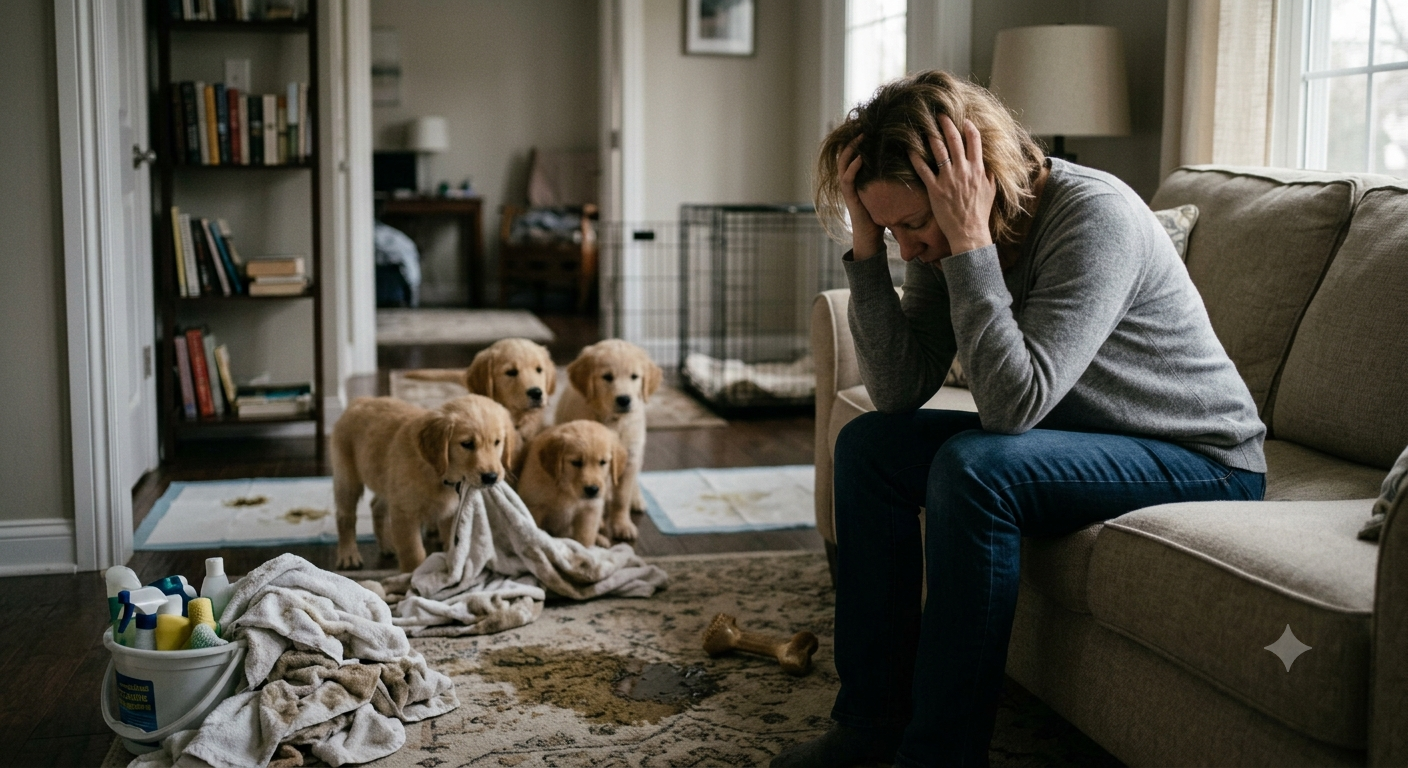
Without a crate, unsupervised accidents happen constantly — reinforcing exactly the wrong habit.
Sarah had been potty training her 11-week-old Cockapoo, Biscuit, for three weeks with mixed results. She was following a schedule, using treats, and cleaning accidents with enzymatic cleaner. Progress was slow — 2–3 accidents per day still, no clear signaling, and no pattern she could predict.
The one thing she hadn’t implemented was a crate. She felt guilty about it. “It seemed cruel,” she said. “Like putting him in a prison.” So Biscuit had full access to the living room and kitchen during the day, supervised as much as possible but inevitably with gaps when Sarah was cooking, on calls, or simply distracted for a few minutes.
A trainer visited and counted seven spots in Sarah’s living room and kitchen that had previous accident scent history — spots Sarah thought she’d cleaned thoroughly. Biscuit was being pulled back to those spots repeatedly, and every unsupervised accident was reinforcing the indoor habit faster than the outdoor training could build the outdoor one.
The trainer introduced a properly sized crate with a divider, placed next to Sarah’s desk, with a comfortable blanket and a chew toy. Biscuit was given the crate whenever Sarah couldn’t actively watch him. In four days, accidents dropped from 2–3 per day to zero. Not because Biscuit suddenly understood training — but because the crate eliminated every unsupervised opportunity for the wrong behavior while the right one was being reinforced outdoors. “I felt so guilty using it,” Sarah said. “Now I feel guilty about the three weeks I didn’t.”
Why Crate Training Makes Potty Training 3x Faster: The Science
The speed advantage of crate training comes from a simple behavioral principle: you cannot build the right habit while the wrong one is still being reinforced. Without a crate, unsupervised indoor accidents happen — reinforcing the indoor elimination habit every time. With a correctly used crate, those reinforcement opportunities disappear entirely, leaving only the outdoor successes to build the habit.
The second reason crate training accelerates potty training is instinctive: dogs have a natural aversion to eliminating where they sleep. This den instinct means a correctly sized crate — just large enough for the puppy to stand, turn around, and lie down — motivates the puppy to hold it rather than go in their sleeping space. This builds bladder control faster than free roaming ever could.
Our 7-Day Program combines crate training and potty training into one integrated daily plan — so every element works together from day one.
✅ All breeds · Crate method included · Instant access
The 5 Crate Training Mistakes That Kill Potty Training Progress
A puppy with extra space in their crate will use the far corner as a bathroom. The crate must be just large enough for the puppy to stand, turn, and lie down comfortably. If you bought an adult-sized crate, use a divider to block off the extra space — this is the single most important crate specification for potty training.
Sending the puppy to the crate after an accident, after misbehaving, or when you’re angry creates a negative association that makes the puppy dread the crate — turning it from a safe den into a source of anxiety. The crate must always be associated with calm, positive experiences.
A puppy left in a crate beyond their bladder capacity is forced to eliminate inside it — directly counteracting the den instinct the crate relies on. If a puppy is forced to soil their crate repeatedly, they lose the aversion to eliminating there, and the training benefit disappears. Max crate time equals approximately 1 hour per month of age.
Pee pads inside the crate teach the puppy that eliminating in the crate is acceptable. They absorb the accident, making it more comfortable, removing the physical discomfort that motivates the puppy to hold it. The crate should contain only a comfortable sleeping pad and a safe chew toy — nothing absorbent.
Putting a puppy in a crate cold — without a positive introduction — produces immediate distress that makes them associate the crate with fear. A proper introduction over 1–2 days makes the crate a place the puppy actively chooses to enter, which is the foundation for all subsequent use.
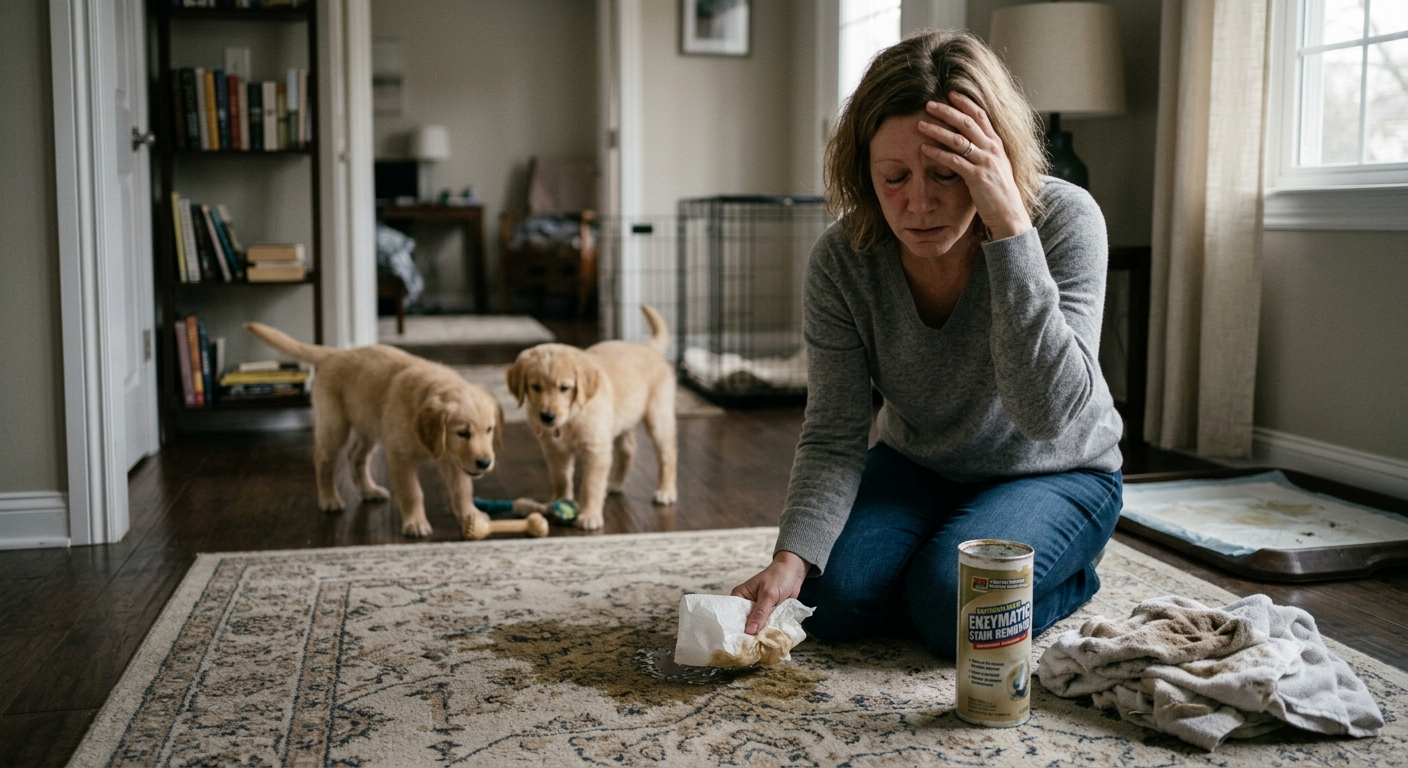
A correctly sized, positively introduced crate becomes a safe space your puppy chooses voluntarily — and the most powerful potty training tool available.
The Correct Crate Training Method: Step by Step Complete Protocol
The crate should allow your puppy to stand up fully, turn around in a complete circle, and lie down stretched out — nothing more. If purchasing a larger crate for your dog’s adult size, use the included divider panel or a custom insert to reduce the space to puppy size. Expand the space as your puppy grows.
Place the crate in a room where the family spends time. Leave the door open and toss high-value treats inside several times throughout the day. Let the puppy explore voluntarily without closing the door. Feed the puppy’s meals just inside the crate entrance, then inside the crate with the door open. Build positive association before any confinement begins.
Once the puppy enters the crate voluntarily for treats, begin closing the door briefly — 30 seconds, then a minute, then 5 minutes. Stay visible. Increase duration gradually over 2–3 days. Give a safe chew toy (Kong, bully stick) when the puppy goes in to create a positive crate activity habit.
Outdoor trip → supervised indoor play/activity → crate when supervision isn’t possible → outdoor trip immediately upon release from crate. This cycle eliminates every unsupervised accident opportunity while creating a highly predictable bathroom schedule that accelerates outdoor habit formation.
The moment your puppy comes out of the crate, go directly to the outdoor spot — before any indoor play, before any greetings, before anything else. The puppy has been holding it in the crate and will need to go immediately. This trip, rewarded immediately upon success, is one of the highest-value training moments of the entire day.
The crate goes in and out of the rotation calmly and neutrally — never in response to misbehavior, never with frustration, never as a consequence. If you feel the urge to put the puppy in the crate as punishment for an accident, take a breath and clean the accident silently instead. The crate’s power comes from being a positive, neutral space.
🎬 Watch our complete crate training and potty training integration guide — including setup, schedule, and common mistakes:
Crate Training vs. No Crate: The Real Difference in Results
❌ Without a Crate
- Unsupervised accidents happen daily
- Indoor scent history builds constantly
- Net learning signal is weak and mixed
- Training takes 2–3x longer on average
- No built-in bladder control development
- Owner must watch the puppy 100% of the time
- Impossible to maintain overnight without accidents
✅ With a Correctly Used Crate
- Zero unsupervised accidents possible
- Indoor scent history stays at zero
- Net learning signal is strong and clear
- Training typically 2–3x faster
- Den instinct builds bladder control naturally
- Gives owner flexible supervision windows
- Overnight accidents manageable and predictable
The Integrated Crate + Potty Training Schedule
Here is the exact daily schedule that combines crate training and potty training for maximum speed:
| Time | Activity | Why It Works |
|---|---|---|
| Wake up | Immediately outside to potty spot + reward | Full bladder after sleeping — highest success chance |
| After outdoor success | Supervised indoor playtime | Just eliminated — safe window for indoor freedom |
| When supervision ends | Into crate with chew toy | Eliminates all unsupervised accident opportunities |
| Upon crate release | Immediately outside + reward | Has been holding it — guaranteed success moment |
| After every meal | Outside within 15 minutes | Gastrocolic reflex — highly predictable elimination trigger |
| After play sessions | Outside immediately | Physical activity stimulates bladder consistently |
| Before bed | Outside + into crate for night | Last elimination before overnight hold period |
Crate Training for Small Dogs: Key Adjustments
Small breeds need the same correctly sized crate — but with shorter maximum confinement times due to their smaller bladder capacity. A toy breed puppy under 10 weeks may need crate release and outdoor trips every 45–60 minutes during active daytime periods. The crate itself works identically — only the timing changes.
Crate Training an 8-Month-Old Dog: It’s Not Too Late
An 8-month-old dog that has never been crate trained can still be introduced to the crate using the same positive introduction method as a puppy. The process takes slightly longer — typically 3–5 days for introduction rather than 1–2 — but the outcome is the same. Many owners of adult dogs with persistent indoor accidents discover that introducing a crate at 8 months produces faster results than months of training without one.
Golden Retriever Crate Training: Why This Breed Thrives in a Crate
Golden Retrievers have a strong den instinct and a powerful desire to keep their personal space clean — making them exceptionally well-suited to crate training. Most Goldens accept crate training faster than average, with many choosing to enter the crate voluntarily within 2–3 days of introduction. Their high food motivation makes the treat-based introduction protocol extremely effective.
Frequently Asked Questions
The 7-Day Potty Training Program integrates crate training and potty training into one complete daily plan — no guesswork, no conflicting advice, just the fastest path to a fully trained dog.
🎯 Get the Full 7-Day Program Now
✅ Instant access · All breeds · Crate method included