Night Training Your Puppy: How to Stop Overnight Accidents
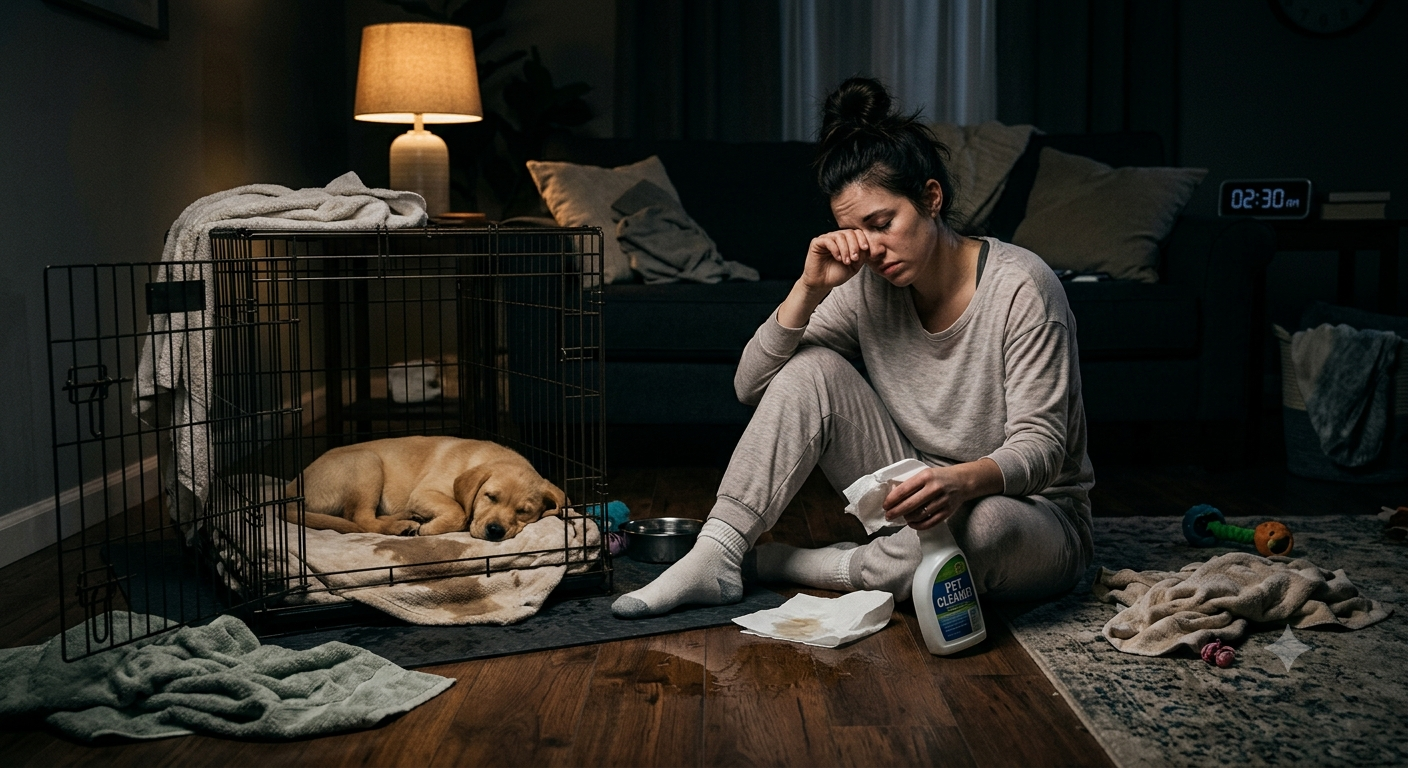
Chris and his wife were three weeks into potty training their 10-week-old Labrador, Archie. Daytime training was going brilliantly — Archie was signaling at the door reliably by day nine and had gone four consecutive accident-free days during waking hours. But every single morning, Chris woke up to a soaked crate pad and a very apologetic-looking Archie.
Chris had read that puppies couldn’t hold it overnight, so he’d resigned himself to morning cleanup as “just part of having a young puppy.” He was removing water at 9pm, taking Archie out right before bed at 11pm, and doing nothing else. The accidents were happening reliably around 3–4am.
A trainer suggested two changes: set a single 3am alarm for an overnight trip, and reduce the crate size so Archie couldn’t move away from the area where he slept. The crate had been purchased for Archie’s adult size — giving him a large sleeping area at one end and an open space at the other that he was using as a bathroom.
Night one with the changes: zero accidents. Night two: zero. By night seven, Chris pushed the alarm to 3:30am. By week three of night training, Archie was sleeping through to 6am without incident. “I spent three weeks cleaning up every morning,” Chris said. “Two changes fixed it overnight. Literally.”
Why Puppies Have Overnight Accidents: The Real Biology
Understanding why overnight accidents happen is the first step to preventing them. It’s not random, and it’s not a training failure — it’s a specific physiological reality that requires a specific management approach.
| Puppy Age | Max Daytime Hold | Expected Night Hold | Overnight Trips Needed |
|---|---|---|---|
| 8–10 weeks | 1.5–2 hours | 2–3 hours | 2–3 trips |
| 10–12 weeks | 2–2.5 hours | 3–4 hours | 1–2 trips |
| 3 months | 3 hours | 4–5 hours | 1 trip |
| 4 months | 4 hours | 5–6 hours | 0–1 trip |
| 5–6 months | 5 hours | 7–8 hours | 0 trips (most nights) |
The 4 Most Common Night Training Mistakes
- Crate too large — puppies will use a far corner of an oversized crate as a bathroom rather than holding it. The crate should be just large enough for the puppy to stand, turn around, and lie down comfortably.
- Water available too late — leaving water accessible up to bedtime fills the bladder at exactly the wrong time. Remove water 2 hours before the last overnight trip.
- No overnight trip scheduled — expecting a young puppy to hold it for 7–8 hours when their physiology allows 2–4 hours is setting them up to fail. One scheduled overnight trip prevents most accidents.
- Making overnight trips exciting — talking to the puppy, playing, or offering treats during overnight trips teaches them that waking you up leads to fun. Overnight trips should be silent, fast, and completely boring.
Our 7-Day Potty Training Program includes a full night training schedule — what to do from the first night through full overnight reliability.
✅ All breeds · Night training included · Instant access
The Complete Night Training Protocol Step-by-Step
The crate should allow your puppy to stand, turn around, and lie down — nothing more. If you have a large crate for your puppy’s adult size, use a divider to block off the extra space. A puppy will not eliminate where they sleep if they have no room to move away from the sleeping area.
This reduces overnight bladder volume significantly without causing dehydration — your puppy has had full access to water all day. The last water access should be approximately 2 hours before the final outdoor trip of the evening, not right before bed.
The last trip of the night should happen within 10 minutes of the puppy going into the crate. Every extra minute between the final trip and crate time is a minute of bladder refilling. Take your puppy out, wait for elimination, reward quietly, and go directly to the crate.
Use the age table above to determine your puppy’s overnight hold capacity, then set an alarm 30 minutes before that limit. For a 10-week puppy that can hold for 3 hours, if you sleep at 11pm, set the alarm for 1:30am. This preemptive trip prevents the accident rather than reacting to it.
No talking, no praise, no treats, no eye contact beyond what’s necessary. Take the puppy out, wait for elimination, bring them straight back to the crate, and return to bed. Any positive engagement during overnight trips teaches the puppy that waking you up produces rewarding attention — creating a habit of unnecessary waking.
As your puppy successfully holds through each scheduled overnight trip without accidents, gradually extend the interval. Over 3–5 weeks, this gradual extension trains the bladder to hold longer overnight, until full sleep-through capability is established.
🎬 Watch our complete guide to night training — including crate setup and the overnight trip protocol:
The Complete Night Training Schedule By Age
🌙 Sample Night Schedule for a 10-Week Puppy
Remove water bowl
2 hours before last trip
Final outdoor trip + into crate
Immediately before bed
Overnight trip #1 (silent)
3 hours after bedtime
Overnight trip #2 (silent)
3 hours after trip #1
Morning trip + water + breakfast
Start of daytime schedule
How to Stop Your Dog from Peeing at Night Long-Term
The overnight accident problem resolves itself naturally as your puppy matures — but the night training protocol accelerates this process significantly compared to simply waiting for the puppy to “grow out of it.” The key elements that make overnight training work:
- Correct crate sizing eliminates accidents that aren’t physiologically necessary — many overnight accidents happen because the puppy can move away from their sleeping area, not because they couldn’t hold it
- Removing water 2 hours before bed reduces overnight bladder load by 30–40% compared to leaving water available until bedtime
- Proactive overnight trips prevent the accident cycle that teaches puppies the crate is an acceptable bathroom space
- Silent overnight trips prevent the attention-seeking habit that causes some puppies to wake unnecessarily once the physiological need is resolved
Night Training Small Dogs: What Changes
Small breeds have smaller bladders and need more frequent overnight trips than the age table above suggests. A 3-month small breed puppy that a larger breed could leave for 4 hours overnight may only manage 2.5–3 hours. Adjust the overnight alarm accordingly — err toward more frequent trips during the first two weeks and extend intervals based on observed results rather than the general table.
For toy breeds and small dogs under 10 lbs: subtract 30–45 minutes from every interval in the schedule above. A schedule that works for a medium-breed puppy will consistently fall short for a small breed puppy of the same age.
Night Training an 8-Month-Old Dog: Breaking Established Overnight Habits
An 8-month-old dog that has been having overnight accidents for months has established the crate — or wherever they sleep — as an acceptable overnight bathroom. Breaking this habit requires the same elements as puppy night training, but with the additional step of thoroughly cleaning the sleeping area with enzymatic cleaner before restarting.
For older dogs, a UV blacklight check of the crate, crate pad, and surrounding floor area is essential — old urine scent in the sleeping area is actively encouraging the dog to continue eliminating there. Remove the scent signal first, then implement the night training protocol.
Golden Retriever Night Training: What to Expect
Golden Retrievers tend to achieve full overnight control slightly faster than the average dog due to their strong desire to keep their sleeping area clean and their high responsiveness to human schedule cues. Most Goldens are sleeping through the night without accidents by 14–16 weeks when night training starts from the first week home.
Frequently Asked Questions
The 7-Day Potty Training Program includes the complete night training schedule, crate setup guide, and week-by-week overnight progression plan — so you both get a full night’s sleep as fast as possible.
✅ Instant access · All breeds · Night training included