Why Your Dog Pees Right After Coming Inside From Outside
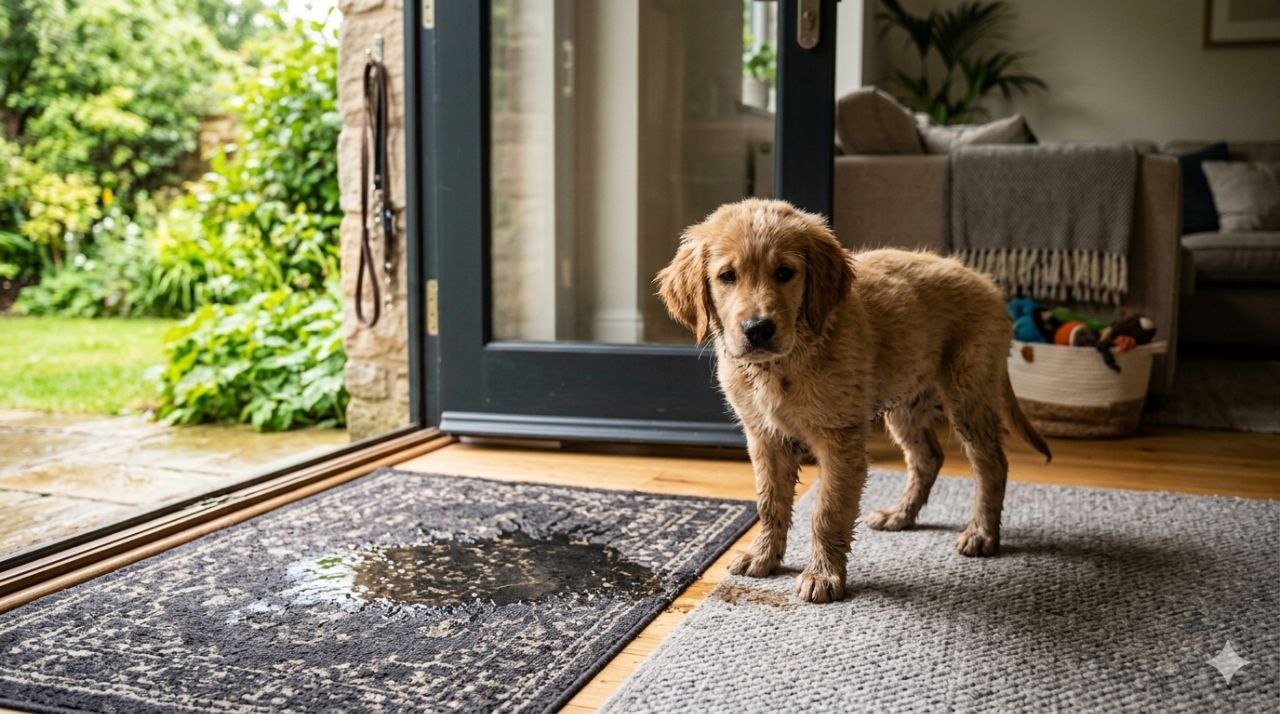
Emma was convinced her 5-month-old puppy, Cooper, was being deliberately difficult. Every single walk followed the same frustrating pattern: 15 minutes outside, multiple stops to sniff, zero results — and within a minute of walking back through the front door, Cooper would squat and pee right on the entryway rug.
Emma assumed Cooper simply didn’t want to go outside, or worse, that he was protesting something. She tried longer walks, different routes, even waiting in the cold for twenty extra minutes. The pattern continued for nearly three weeks.
The breakthrough came from an unexpected place: a trainer pointed out that Cooper wasn’t “holding it out of spite” — he was distracted by the walk itself and never fully relaxed enough to go. The moment he walked back inside to a familiar, safe space, his body finally let go. Once Emma changed her approach — standing still in one quiet spot instead of walking the whole time — Cooper started going outside within the first five minutes, every time.
The Real Reasons Dogs Pee Right After Coming Inside
This frustrating pattern has several possible causes, and most dogs experience a combination of more than one. Understanding which applies to your dog is the first step toward fixing it.
Too Distracted to Relax
Walking, sniffing, and exploring keeps a dog’s nervous system in “alert” mode. Many dogs physically can’t fully relax and eliminate while still moving and stimulated.
The “Safe Space” Trigger
Home feels secure and familiar. Some dogs subconsciously hold their bladder in unfamiliar or exposed outdoor areas and release the moment they feel safe again — indoors.
Trip Was Too Short
Dogs often need several minutes of calm standing or light sniffing before their body is ready to go — not just a quick 2-minute dash outside.
Anxiety or Overstimulation
New sounds, people, cars, or other animals outside can create just enough stress to prevent elimination — stress hormones and the urge to urinate don’t mix well.
Incomplete Elimination
Your dog may have gone a small amount outside but still had more to release — and the remaining urge surfaces minutes later once they’re comfortable.
Weather Avoidance
Rain, cold, heat, or wind can make dogs rush through their outdoor time without fully going, only to need to go again once they’re back in comfort.
Our complete potty training program teaches you the exact outdoor routine that gets dogs to fully relax and go outside — every time, not just sometimes.
✅ Works for puppies, adult dogs, and all breeds
How to Stop Your Dog from Peeing Indoors After Outdoor Trips Step-by-Step
The fix isn’t longer walks — it’s a more focused, lower-stimulation approach to the potty trip itself. Here’s exactly how to restructure your outdoor routine to get real results outside, not indoors.
Movement keeps a dog’s brain in “explore” mode. Pick one quiet area and stay there for the first 3–5 minutes before considering a walk. This alone solves the problem for many dogs.
Most owners cut the trip short after 2–3 minutes of nothing happening. Dogs often need that time just to settle their nervous system enough to actually go.
Say “go potty” in the same calm tone every time, in the same spot. This builds a strong conditioned response that helps your dog relax and focus on the task.
If your dog goes but seems to still have urgency, don’t rush back inside. Many dogs need a second round once the first release relieves initial pressure.
If your yard or street has a lot of activity — other dogs, traffic, people — try a quieter time of day or a more secluded spot until the habit is established.
If you combine the potty trip with playtime, your dog stays in stimulated mode the entire time. Do a calm potty trip first, then play as a reward afterward.
Incomplete Elimination: The Overlooked Cause
One of the most overlooked reasons for this pattern is simple: your dog didn’t fully empty their bladder outside. Dogs — especially puppies — often release a small amount quickly and then get distracted before finishing. The remaining urge resurfaces once they’re calm again indoors.
How to Tell If Incomplete Elimination Is the Cause
- Your dog goes quickly outside (within seconds of arriving) without much sniffing first
- The outdoor pee seems unusually small compared to typical amounts
- The indoor accident happens within 1–5 minutes of coming inside, not 20–30 minutes later
- This happens consistently, not just occasionally
How to Potty Train Your Dog Quickly Once You Fix This Pattern
Solving the “pees right after coming inside” problem is often the missing piece that accelerates the entire potty training process. Once your dog reliably empties fully outdoors, you can build the rest of a fast, effective training routine around that success.
| Element | What to Do | Why It Works |
|---|---|---|
| Designated spot | Same outdoor location every time | Familiar scent speeds up the urge |
| Minimum time outside | 5–10 minutes before giving up | Allows nervous system to settle |
| Cue word | Same phrase, calm tone, every trip | Builds a conditioned trigger response |
| Reward timing | Treat + praise within 3 seconds | Reinforces the correct location and behavior |
| Post-success wait | Stay 1–2 extra minutes after they go | Catches incomplete elimination before going inside |
Indoor Potty Training for Small Dogs: Does This Problem Still Apply?
Small dogs using indoor pads or grass trays can experience a similar version of this issue — going partially on the pad, then finishing elsewhere in the house minutes later. The underlying cause and the fix are nearly identical to the outdoor version.
- Keep your small dog near the pad for a few extra minutes after they appear to finish — many will go again if given the chance.
- Reduce nearby distractions around the indoor potty area — toys, foot traffic, and noise can interrupt the process the same way outdoor stimulation does.
- Use a consistent, calm cue word at the indoor spot just as you would outside — consistency works the same regardless of location.
- Watch for the “half-finished” signal — sniffing again shortly after stepping off the pad usually means they’re not actually done.
The 7-Day Potty Training Program gives you the exact outdoor routine, timing, and rewards to stop accidents — including the “right after coming inside” pattern — for good.
🚀 Start the 7-Day Program Today
🔒 Proven method · All breeds · All ages
Potty Training an 8-Month-Old Dog with This Pattern
Older puppies and young adult dogs at 8 months have stronger bladder control than younger puppies, which means this pattern is almost always behavioral or environmental rather than physical capacity. If your 8-month-old dog consistently pees indoors right after outdoor trips, the cause is typically one of two things: distraction during the walk, or an outdoor environment that creates mild stress.
At this age, dogs are also highly capable of learning a new routine quickly. A focused, consistent approach for just 1–2 weeks typically resolves the pattern completely, because the dog already has the physical control — they just need the right conditions and habit reinforcement.
Golden Retriever Potty Training and the “Right After Coming Inside” Pattern
Golden Retrievers are particularly prone to the distraction-based version of this problem. Their high energy and intense curiosity about everything in their environment — smells, people, other dogs — often means they’re too engaged during outdoor trips to fully relax and eliminate.
The good news is that Goldens also respond exceptionally well to structured routines. Teaching your Golden to associate one calm, quiet spot with “business time” — separate from playtime and exploration — typically resolves this issue faster than with more independent breeds.
How to Stop Your Dog from Peeing in the House for Good
The “right after coming inside” pattern is just one specific version of the broader indoor accident problem. Once you’ve addressed it, apply these general principles to keep your dog accident-free across every situation.
- Clean with enzymatic cleaner — every time, no exceptions, to prevent the spot from becoming a repeat location
- Tighten supervision temporarily — keep your dog within sight or on a leash indoors for the first few minutes after coming in from outside
- Track the pattern — note the time, duration outside, and weather conditions for a week to identify your dog’s specific triggers
- Stay consistent across all caregivers — if multiple people walk the dog, everyone needs to follow the same standing-still, minimum-time approach
Frequently Asked Questions
The 7-Day Potty Training Program gives you the exact outdoor routine, timing, and reward system to make every trip outside count — no more indoor surprises.
🎯 Get the Full 7-Day Program Now
✅ Instant access · Works for puppies, adults & all breeds