Potty Training an Older Dog: What Actually Works
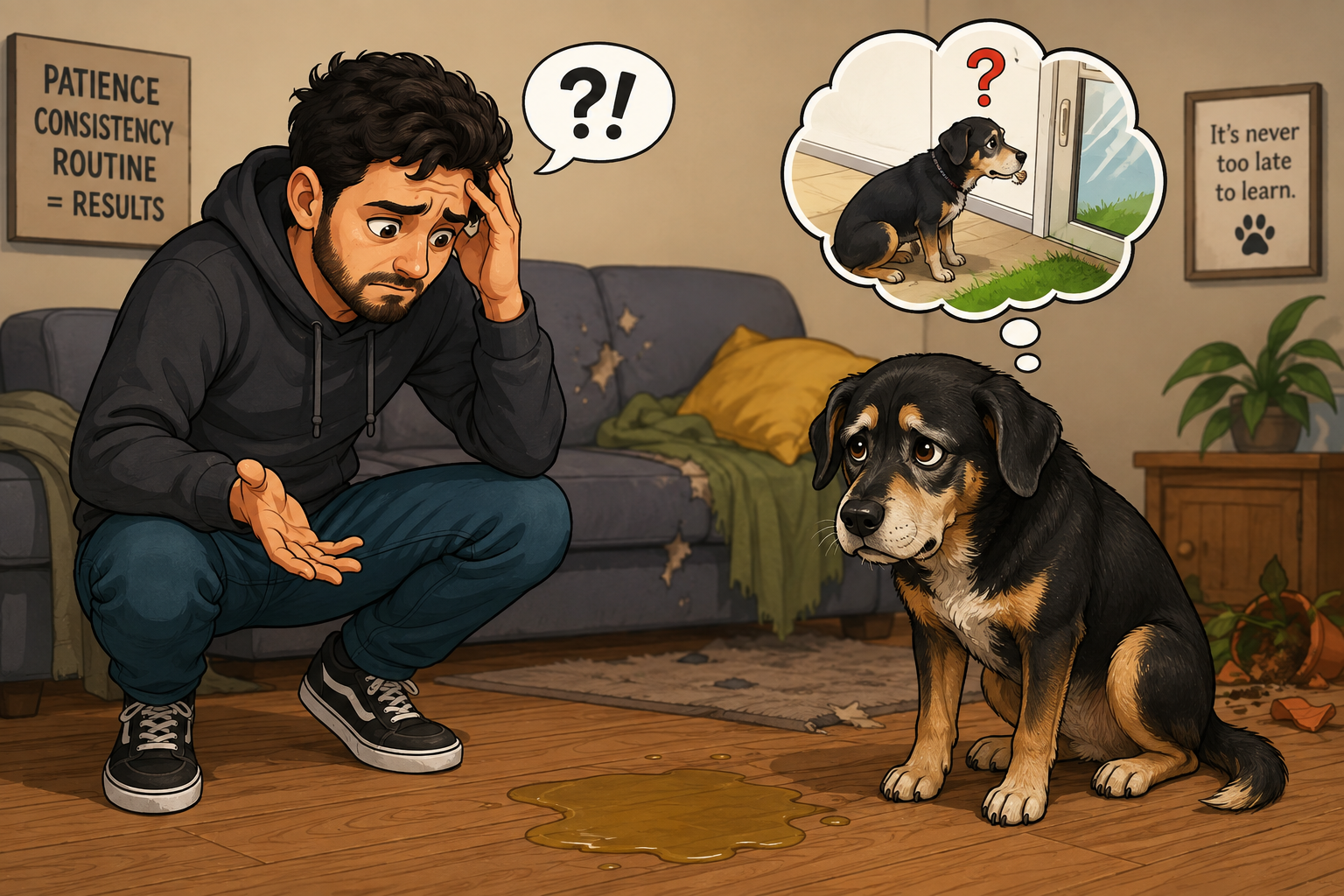
Diane adopted Bailey, a 7-year-old Beagle mix, from a shelter with almost no history on his prior habits. The shelter staff guessed he’d probably lived outdoors for most of his life. For the first two weeks, Bailey had accidents constantly — not from confusion, but because he’d apparently never learned that a house was somewhere you didn’t eliminate.
Diane tried treating Bailey like a puppy at first — frequent trips, heavy supervision — but progress was slow and Bailey seemed anxious around the training sessions, sometimes hiding rather than engaging. A trainer explained that older dogs, especially those with unknown or difficult histories, often need a slower, lower-pressure introduction and extra patience before the standard schedule-based approach can really take hold.
The trainer had Diane drop the intensity, use very high-value rewards, and focus first on building trust with short, calm outdoor trips before worrying about strict timing. Once Bailey seemed comfortable and food-motivated during trips, the trainer layered in a consistent schedule and cue word, much like puppy training but paced more gently.
By week five, Bailey was going reliably to one outdoor spot with almost no accidents. “Everyone kept saying older dogs are harder to train,” Diane said. “He wasn’t harder — he just needed me to slow down before speeding up.”
Why Older Dogs Need a Different Approach
Unknown or conflicting prior habits
Rescue and rehomed dogs often arrive with established habits from a previous environment that may directly conflict with house training expectations.
Trust and anxiety factors
Older dogs, especially rescues, may need extra time to feel safe before responding well to structured training — pushing too fast can increase stress rather than speed progress.
Physical and medical changes
Senior dogs may develop reduced bladder control, joint pain that makes reaching the spot harder, or conditions like incontinence that require a different management approach than pure training.
Stronger existing associations
An older dog with years of an established routine (even an incorrect one) has a deeper existing association to work against, which generally takes longer to shift than building a habit from scratch.
Our 7-Day Program includes adjustments for older dogs and rescues with unknown history — not just puppies.
✅ All ages · All breeds · Instant access
Potty Training an Older Dog: 7 Steps That Work Complete Fix
Before assuming it’s purely behavioral, have a veterinarian check for urinary tract infections, incontinence, kidney issues, or joint pain that could be affecting an older dog’s ability to reach the spot in time. This step is far more important for older dogs than puppies.
Especially for rescues with unknown history, begin with calm, short outdoor trips without strict timing pressure. The goal is comfort and positive association before layering in structure.
Older dogs, especially those unlearning a prior habit, often need stronger motivation than a standard treat. Use your dog’s absolute favorite reward consistently for successful trips.
Once your dog seems relaxed and engaged during trips, introduce a fixed schedule and one consistent cue word — the same core principles as puppy training, just introduced after the trust-building phase.
For senior dogs with joint pain or mobility issues, make the outdoor spot as accessible as possible — minimal stairs, non-slip surfaces, and a shorter distance from the door if needed.
Close supervision helps catch and redirect early signals, the same as with puppies. Avoid any punishment for accidents — older dogs with uncertain histories are especially prone to anxiety from correction-based approaches.
Older dogs, particularly those unlearning years of a different habit, often take 3–6 weeks to reach the reliability puppies might reach in 1–2 weeks. This is normal, not a sign the process isn’t working.
Older Dog vs. Puppy Potty Training: Key Differences
| Factor | Puppy | Older Dog |
|---|---|---|
| Starting point | No prior habits to unlearn | May have conflicting established habits |
| Trust needed before structure | Minimal | Often significant, especially for rescues |
| Typical timeline to reliability | 1–3 weeks | 3–6 weeks |
| Medical factors to rule out | Less common | More common (UTIs, incontinence, joint pain) |
| Reward intensity needed | Standard treats often sufficient | Often needs higher-value rewards |
Senior Dog Incontinence: When It’s Not About Training
Some older dogs develop genuine incontinence — involuntary leaking, often during sleep or rest, unrelated to behavioral control. This is a medical condition, not a training failure, and responds to veterinary treatment (sometimes medication) rather than behavioral correction.
- Signs of incontinence vs. accidents: leaking during sleep, dribbling while standing, or no apparent awareness of the accident happening
- Management options: washable dog diapers, waterproof bedding, and more frequent scheduled trips can help manage the condition alongside any prescribed treatment
- This isn’t a training failure — no amount of schedule or reward adjustment will resolve a true medical incontinence issue without veterinary involvement
Frequently Asked Questions
The 7-Day Potty Training Program includes guidance for older dogs and rescues, not just puppies starting from zero.
🎯 Get the Full 7-Day Program Now
✅ Instant access · All ages · All breeds