Week 2 After the 7-Day Method: What Happens When You Keep Going
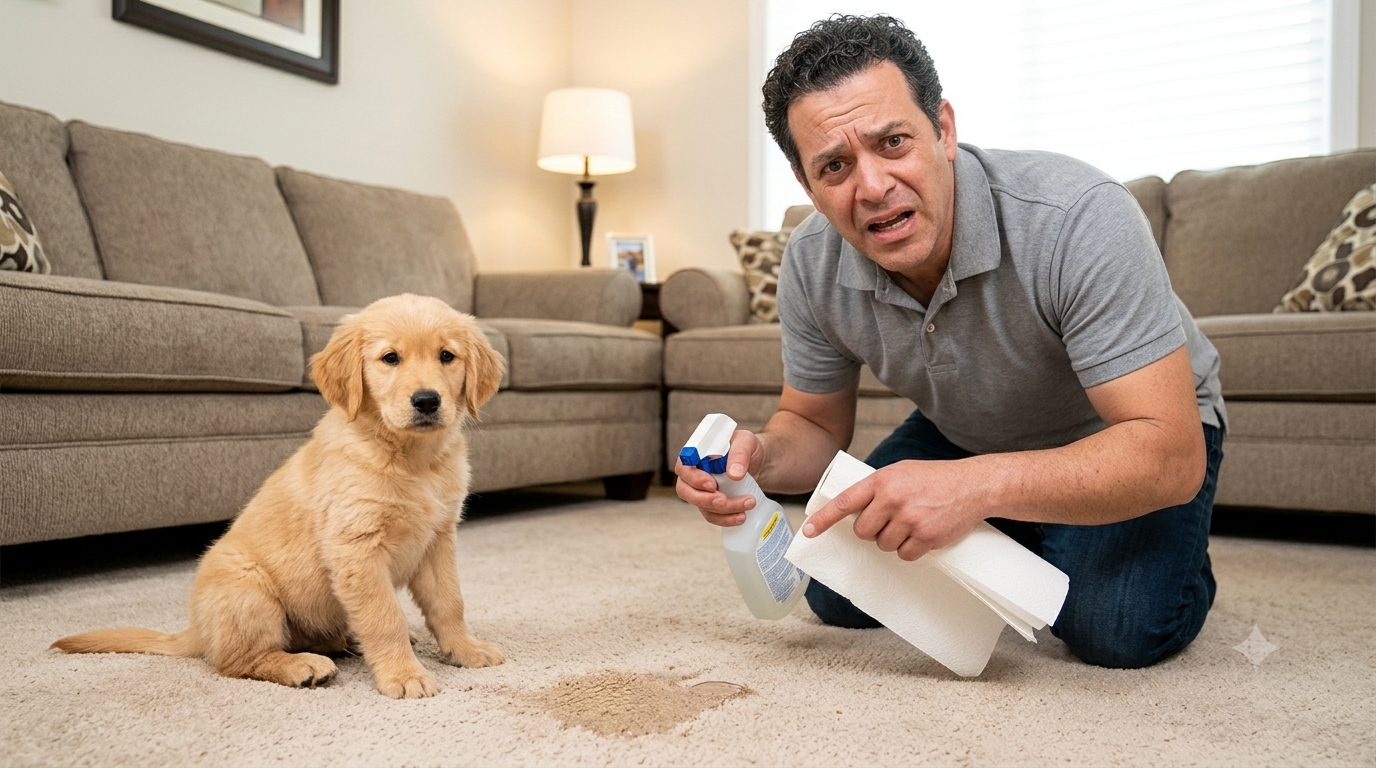
Amy and Pepper had an extraordinary week one — from 6 accidents on day one to zero by day six and seven. By day 8, Amy was confident. She let Pepper roam the living room and kitchen unsupervised while she worked in the next room. She skipped a couple of scheduled outdoor trips because “Pepper seemed fine.” She stopped bringing treats outside because Pepper was “obviously getting it.”
Day 9: two accidents. Day 10: three. By day 12, Amy was back to almost the same accident rate as day two. She called the trainer, convinced something had gone wrong with Pepper specifically.
The trainer’s diagnosis was immediate: “Pepper didn’t regress. You did. You removed every element that was making the training work — all in three days.”
Amy reinstated the full protocol on day 13. Zero accidents on day 14. The habit hadn’t disappeared — it had just been unsupported for four days. Week 2, done correctly, is what turns a 7-day foundation into a permanent result.
Why Week 2 Is the Most Important Week of Potty Training
Week one builds the habit. Week two either cements it or erodes it. The reason is behavioral: a habit formed over 7 days is not yet automatic — it still requires the supporting conditions that created it. Remove those conditions too early and the habit weakens. Maintain them through week two and the habit transitions from supported to self-sustaining.
What Should Happen in Week 2: The Normal Progress Curve
If week one went well, here’s what week two should look like when the protocol is maintained:
Zero or near-zero accidents continue. Signaling behavior at the door becomes more consistent and deliberate — your dog is beginning to rely on their own signal rather than the schedule alone. The cue word response is now fast and reliable. Outdoor elimination begins happening more quickly after arrival at the spot.
Begin testing limited indoor freedom — one additional room, supervised, for short periods. Watch for signal behavior rather than accidents. Your dog should begin seeking you out or going toward doors in the new space if they need to go. Any accident in the new space means expansion happened too soon; return to the previous freedom level for 3 more days.
By the end of week two, a dog trained correctly should be signaling consistently — approaching the door, making eye contact, or showing other pre-elimination behaviors — before the scheduled trip in most cases. This shift from schedule-dependent to signal-driven behavior is the clearest indicator that the habit is becoming self-sustaining.
Our program includes week-by-week guidance beyond day seven — so you know exactly what to do at every stage from day one through full reliability.
✅ All breeds · Day-by-day guidance · Instant access
The 4 Week-2 Mistakes That Reset Everything Most Common
This is the most common week-2 mistake. Removing the reward before the behavior is automatic removes the dopamine reinforcement that’s still needed to cement the habit. In week two, the reward frequency can begin to reduce gradually — but it should never stop entirely. Every outdoor success still gets a treat in week two. Every single one.
A dog that had zero accidents on days 5, 6, and 7 under close supervision is not ready for unsupervised full house access on day 8. The habit is supported by the structure — not yet by the dog’s own automatic decision-making. Week two freedom should expand one room at a time, supervised, with at least 3 accident-free days at each level before moving to the next.
The schedule is what the dog’s body clock is synced to. Miss two or three scheduled trips in a row and the body clock drifts, urgency builds unexpectedly, and accidents happen in the gaps. Week two schedule should be maintained at week one frequency — every 90 minutes for young puppies, plus all five trigger events.
If a week-two accident produces frustration, disappointment, or any emotional reaction — however subtle — it creates anxiety that slows relearning. Treat every accident in week two with the same neutral, silent cleanup as week one. An accident in week two means the structure needs tightening, not that the training failed.
The Week 2 Protocol: Exactly What to Do Differently From Day 8
Don’t modify anything from week one during the first three days of week two. The continuity reinforces the habit loop while the neural pathway is still solidifying. Changes — including positive ones like expanded freedom — should wait until days 11–12 at the earliest.
Move from rewarding every outdoor success to rewarding approximately 3 out of every 4 successes — but maintain reward enthusiasm at 100% when you do reward. This variable reinforcement schedule is actually more powerful than constant reward for sustaining behavior long-term, while preparing your dog for the gradual phase-out to come.
Add one new supervised room. Watch for signals, not accidents. If three accident-free days pass in the new expanded space, add another room. If an accident occurs, return to the previous freedom level and add 3 more days before trying again. This gradual expansion is what prevents the week-2 freedom crash.
Week two is when your dog’s signals are becoming more deliberate and intentional. Responding immediately to every signal — even ambiguous ones — reinforces the communication pathway more powerfully than the schedule alone. Your fast response tells your dog: “This works. Keep doing this.”
The cue word conditioning continues to strengthen through week two and beyond. Don’t drop it because it “seems to be working” — it’s working because you’re using it. The goal is a fully conditioned verbal trigger that functions reliably anywhere, in any environment. That level of conditioning typically takes 3–4 weeks of consistent use.
How to Stop Your Dog from Peeing in the House Long-Term
The most reliable way to permanently stop indoor accidents is the gradual, structured freedom expansion of week two — never the sudden freedom grant that causes the classic “week-two crash.” Here’s the complete freedom expansion roadmap:
| Stage | Timing | Freedom Level | Advance When |
|---|---|---|---|
| Week 1 | Days 1–7 | One room, constant supervision or crate | Zero accidents for 2+ consecutive days |
| Early Week 2 | Days 8–10 | Same as week 1 — no changes | Habit consolidating, signaling active |
| Mid Week 2 | Days 11–14 | Add one room, supervised | 3 accident-free days in expanded space |
| Week 3 | Days 15–21 | Add second room, brief unsupervised | 5 consecutive accident-free days |
| Week 4+ | Days 22+ | Gradual full house access | 2+ weeks accident-free at previous level |
Potty Training a Small Dog in Week 2: Adjusted Timeline
Small breeds form habits at the same rate as larger breeds — but their smaller bladder capacity means the schedule must be maintained at higher frequency through week two. A small dog that graduated to zero accidents in week one on a 60-minute schedule should stay on that 60-minute schedule through at least days 8–12 before beginning to extend intervals.
Potty Training an 8-Month-Old Dog: Week 2 Takes Longer
For an older dog whose indoor habits are being broken rather than replaced with a new blank slate, week two looks different. Expect 3–5 more days before the consolidation phase of week one is reached. The freedom expansion in week two should be even more gradual — single rooms, shorter unsupervised windows, and a longer wait before advancing to the next level.
Golden Retriever Potty Training Week 2: The Enthusiasm Risk
Golden Retrievers often make such enthusiastic progress in week one that their owners feel a false confidence by week two. A Golden that was signaling actively by day five feels like a fully trained dog by day eight. This feeling is misleading — the habit is real but not yet automatic, and Goldens in particular can regress quickly when the structure is removed too soon because their high social attunement means they adapt their behavior to whatever expectations are being communicated.
When you tighten the schedule, Goldens tighten with it. When you loosen it, they loosen with it. Use this characteristic to your advantage in week two: maintain the structure explicitly, and your Golden’s adaptive nature will follow it to full reliability faster than most breeds.
🎬 Watch our full video guide on what to do after the 7-day method — and how to make the results permanent:
Frequently Asked Questions
The 7-Day Potty Training Program includes week-by-week guidance for making the results permanent — so you never have to wonder what to do on day 8, 10, or 14.
✅ Instant access · All breeds · Week-by-week guidance included