How to Potty Train a Puppy in 7 Days: The Results Are In
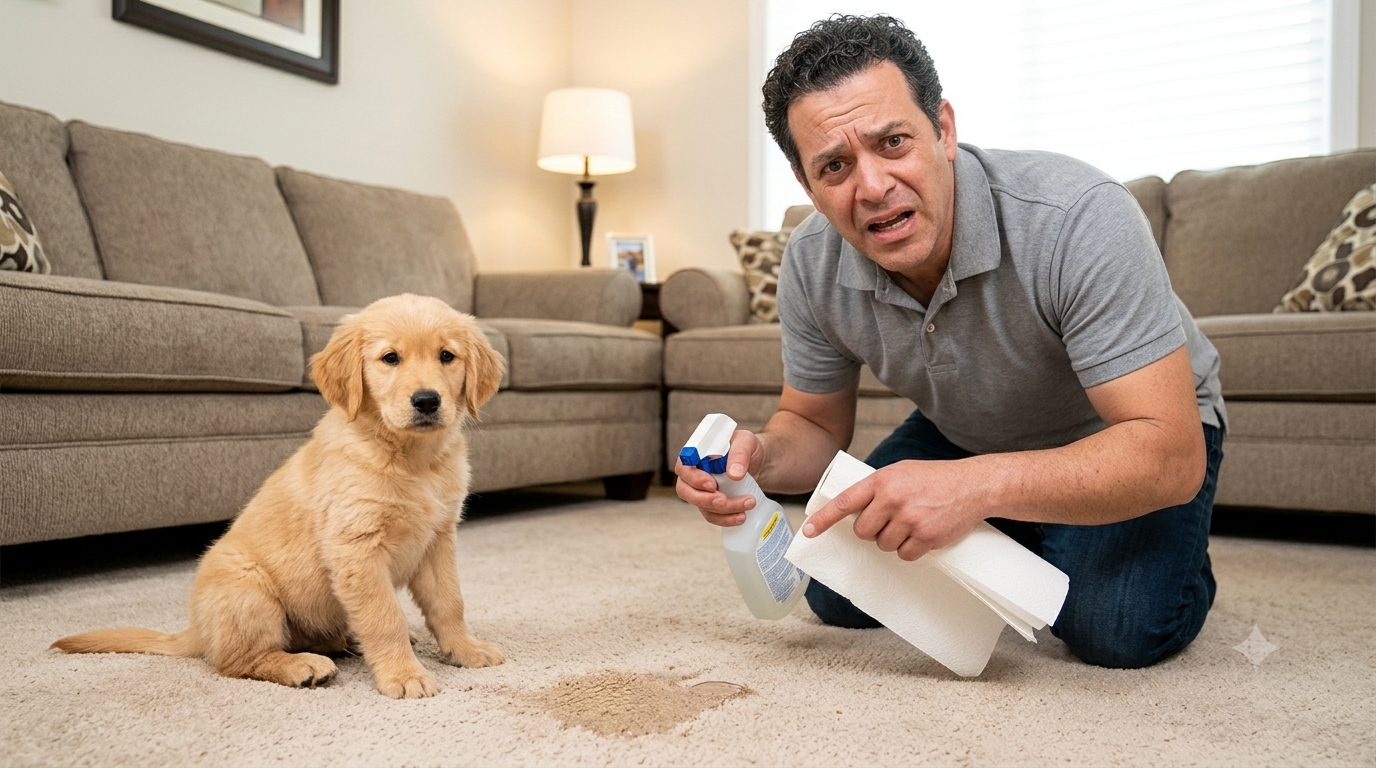
Amy adopted a 12-week-old Beagle mix named Pepper and committed to documenting the full 7-day potty training process — not to prove a point, but because she was skeptical herself. “Every article I read said 7 days,” she told me. “But every person I talked to said it took months. I wanted to know what was actually true.”
Amy followed a structured protocol exactly: fixed outdoor spot, consistent cue word, high-value treats within 3 seconds of outdoor success, silent cleanup indoors, crate when unsupervised, and a schedule of trips every 90 minutes plus after every meal, nap, play session, and drink of water.
She tracked every accident and every outdoor success on a simple notepad. By the end of day seven, Pepper had gone from 6 indoor accidents on day one to zero indoor accidents on days six and seven. She wasn’t fully reliable without supervision — Amy was clear about that. But the pattern was unmistakable, and the results were real. “I didn’t expect it to work this well,” she said. “I thought 7 days would just reduce the accidents. I didn’t think she’d actually be going to the door on her own by day five.”
The 7-Day Results: What Actually Happened Day by Day
Here is the day-by-day breakdown of Pepper’s potty training progress, including accident counts, outdoor successes, and behavioral observations. The protocol was followed without exception on every day.
Indoor accidents: 6 | Outdoor successes: 4 | Signals shown: 0
Pepper was overwhelmed by the new environment. She eliminated frequently and with almost no warning. Every accident was cleaned silently with enzymatic cleaner. Four outdoor successes were rewarded enthusiastically with chicken pieces within 2 seconds.
Indoor accidents: 4 | Outdoor successes: 7 | Signals shown: 0
Outdoor successes doubled. Pepper began responding to the cue word by sniffing around the designated spot, though elimination was still inconsistent. Amy noted that accidents happened primarily in the 90-minute gaps when she was briefly distracted — not during supervised periods.
Indoor accidents: 2 | Outdoor successes: 9 | Signals shown: 1
A significant drop in accidents. Pepper began sitting near the back door once — not clearly as a signal, but as a behavioral shift worth noting. The cue word “go potty” was producing a consistent response at the outdoor spot. Amy identified that post-drink trips had been the remaining gap in her schedule and added them.
Indoor accidents: 1 | Outdoor successes: 11 | Signals shown: 2
One accident — happened when Amy was on a phone call and briefly stopped watching. Pepper showed two clear door-approach signals that Amy caught and responded to, both resulting in outdoor success. Reward enthusiasm was maintained at maximum level.
Indoor accidents: 1 | Outdoor successes: 12 | Signals shown: 3
First full morning without a single indoor accident. One afternoon accident coincided with an unexpected visitor causing excitement and distraction. Door-approach signals becoming clearer and more deliberate. Amy described Pepper’s behavior as noticeably more intentional than days 1–3.
Indoor accidents: 0 | Outdoor successes: 13 | Signals shown: 5
First fully accident-free day. Pepper signaled five times, all responded to, all resulting in outdoor success. Reward maintained at full intensity for every success. Cue word response now instant — Pepper begins sniffing the ground at the outdoor spot the moment she hears “go potty.”
Indoor accidents: 0 | Outdoor successes: 13 | Signals shown: 6
Second consecutive accident-free day. Six clear signals, all responded to successfully. Pepper approaching the door independently between scheduled trips and whining softly. Amy described the shift as dramatic. “She’s a different dog than she was seven days ago.”
The same structured method that produced Pepper’s results is available in our complete program — with a day-by-day plan, reward schedule, and everything you need from day one.
✅ Proven results · All breeds · Instant access
The Exact Method That Produced These Results Complete Protocol
Every element of the 7-day protocol that produced Pepper’s results is replicable. Here is the exact structure Amy followed, which you can begin today:
Same quiet corner every time — no variation. The consistent scent of the spot builds a classical trigger that accelerates outdoor elimination significantly by day 3–4.
Same phrase, same calm tone, every single trip. By day 5, the phrase was producing an immediate sniffing response at the outdoor spot — classical conditioning working exactly as intended.
Not kibble. Not a standard training treat. Cooked chicken — something Pepper found genuinely exciting. The treat was kept in a pocket before every outdoor trip so timing was never delayed.
Out every 90 minutes during the day, plus immediately after waking, 15 minutes after every meal, after every play session, 20 minutes after drinking water, and before bed. No exceptions, including weekends.
No reaction, no eye contact directed at the accident, no words. Clean immediately with enzymatic cleaner, allow to dry, and move on. No spot was allowed to develop a scent history.
Zero unsupervised free roaming throughout the 7 days. Pepper was either actively watched or in the crate. This single constraint eliminated all accidental reinforcement of indoor elimination during the critical first week.
🎬 Watch the full video breakdown of the 7-day potty training results — including what worked and what was hardest:
What the Results Mean for Your Puppy’s Potty Training
The 7-day results are significant — but they come with important context. Here’s what the data actually tells us about how to potty train your dog quickly and what to realistically expect:
| What Happened in 7 Days | What Continues After Day 7 |
|---|---|
| Accidents dropped from 6 to 0 per day | Occasional accidents during excitement or new environments |
| Clear door-signaling behavior established | Signal reliability increases weekly |
| Cue word functioning as a consistent trigger | Cue response strengthens further with continued use |
| Outdoor success rate reached 100% | Full unsupervised reliability in 2–4 more weeks |
| Indoor scent history fully eliminated | No existing spots pulling dog back |
How to Stop Your Dog from Peeing in the House: The 7-Day Foundation
Permanently stopping indoor accidents requires laying the correct foundation in the first 7 days — which is exactly what this method builds. The key elements that make the 7-day approach effective at stopping indoor peeing are:
- Eliminating all indoor scent triggers with enzymatic cleaner from day one — removing the chemical signals that pull dogs back to indoor spots
- Making outdoor success the most rewarding experience of the day — the contrast between enthusiastic outdoor reward and neutral indoor cleanup creates a clear behavioral preference
- Preventing all unsupervised indoor accidents during the critical first 7 days — stopping the wrong habit from reinforcing while the right one is forming
- Building a functional cue word that accelerates outdoor elimination and can be used proactively when needed
Indoor Potty Training for Small Dogs: Can They Train in 7 Days Too?
Small breeds can achieve the same 7-day results — but require shorter intervals due to their smaller bladder capacity. For toy breeds and small dogs under 10 lbs, reduce the schedule interval from 90 minutes to 45–60 minutes during active periods. The rest of the protocol is identical.
Small dogs using indoor grass pads or absorbent trays follow the same 7-day method with the pad as the designated spot. The cue word, immediate reward, and silent cleanup approach all apply without modification. Most small dog owners following the protocol correctly see the same pattern: significant reduction by day 3, first accident-free days by days 5–6.
Potty Training an 8-Month-Old Dog in 7 Days: What Changes
Can an older dog train in 7 days? The honest answer: the same 7-day protocol produces significant improvement, but full results take longer than with a young puppy because established indoor habits must be extinguished before new ones can solidify. Expect:
- Days 1–3: Similar accident rate to the starting point — the old habits are strong
- Days 4–7: Clear reduction, but the curve is less dramatic than with a puppy
- Week 2–3: The results a puppy reaches in week one typically appear for an older dog
- Full reliability: Usually 4–8 weeks for a dog with months of established indoor habits
Golden Retriever Potty Training in 7 Days: Breed-Specific Results
Golden Retrievers are among the best candidates for 7-day potty training because of their high food motivation, strong human bonding, and rapid classical conditioning response. Many Golden owners report even faster results than the 7-day average — with some seeing active door signaling as early as day 3 or 4 when the method is applied correctly.
Frequently Asked Questions
The complete 7-Day Potty Training Program gives you the exact daily protocol, schedule, reward strategy, and troubleshooting guide that produced the results in this article — for your dog, starting now.
🎯 Get the Full 7-Day Program Now
✅ Instant access · All breeds · Puppies to adults · Proven results