What No One Tells You About Your Puppy’s First Day at Home — And Why It’s Costing You Weeks of Potty Training
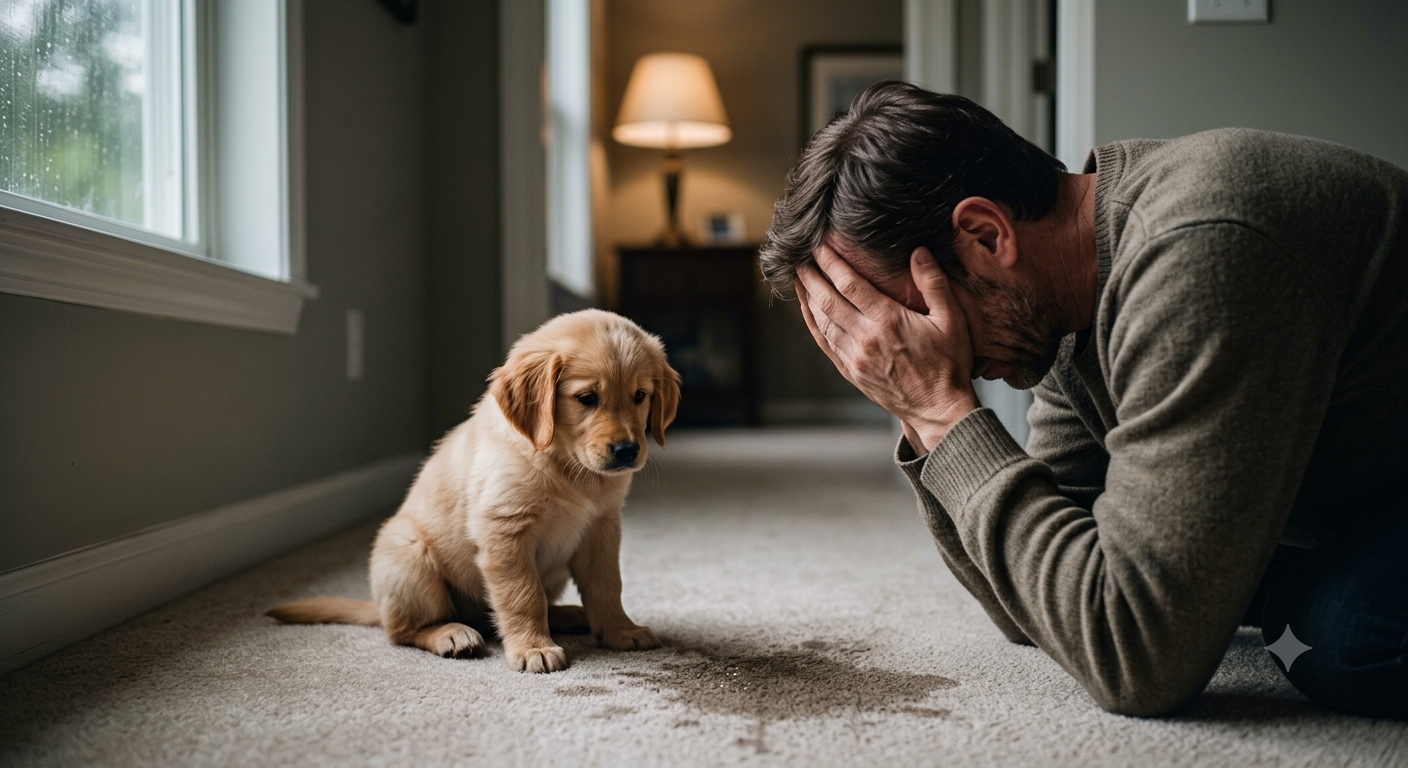
When Nina picked up her 9-week-old Labrador puppy, Max, she was fully prepared. She’d read three books, watched a dozen YouTube videos, bought every supply on the recommended list. The first day, she was so excited that she invited her entire family over — grandparents, cousins, and three children under the age of ten — to meet Max. Everyone held him, played with him, and passed him around the living room for four hours.
That night, Max had six accidents. The second day, eight. By the end of week one, Nina was exhausted and convinced something was wrong with Max specifically. “He seems smart,” she said, “but he just doesn’t get it.”
A trainer looked at Nina’s account of day one and immediately identified the problem. Max had arrived into an overwhelming sensory environment — too many people, too much excitement, too much stimulation — which meant he never fully relaxed during his entire first day. A puppy that can’t relax can’t regulate his bladder. Every accident that first day had happened while he was overstimulated.
More critically: Max had been inside the house for four hours before anyone took him outside for the first time. Those four hours established the living room as a place where elimination was acceptable — an association that took three extra weeks to undo.
The First-Day Mistakes That Cost You Weeks of Puppy Potty Training
Most puppy potty training guides start with week one. But by the time week one begins, many owners have already made four or five decisions on day one that make everything harder than it needs to be. Here are the most common — and most costly — first-day mistakes:
The single most damaging first-day mistake. Your puppy’s bladder is full after the car journey. The first location they eliminate becomes strongly associated with “bathroom” through classical conditioning. If that first elimination happens inside your living room, you’ve created an indoor bathroom association before potty training has even begun.
Overstimulation from multiple new people prevents a puppy from relaxing enough to regulate their bladder. An overstimulated puppy has accidents not from lack of training, but because their nervous system is too activated to signal urgency before it becomes overflow. Day one guests cost most owners 3–5 extra weeks of potty training.
A puppy exploring a full house on day one has unlimited opportunity to establish indoor bathroom spots in rooms you’ll never immediately detect. Each undetected accident leaves a scent marker that creates a pulling attraction back to that location for weeks. Day one should mean one room, supervised, at all times.
The first day is not a grace period — it’s day one of training. Every hour that passes without a structured outdoor trip is an hour where indoor elimination is happening without consequence, beginning to establish the wrong habit. The schedule starts the moment you pull into your driveway.
Carrying a puppy to a random patch of grass and hoping they go doesn’t build the scent-based classical association that accelerates training. A consistent, pre-chosen outdoor spot with some of the puppy’s own scent (from a cloth used at the breeder) dramatically speeds up first-day outdoor success.
Our complete potty training program starts with the first hour — giving you the exact protocol for your puppy’s arrival day and every day after.
✅ Works from day one · All breeds · Instant access
The Correct First-Day Protocol: What to Do Instead From the Driveway
The right first-day approach takes less effort than what most owners do — it’s simply more deliberate. Here is the exact sequence that gives your puppy potty training the strongest possible start:
Park the car and walk directly to your designated outdoor bathroom spot before your puppy has touched any indoor surface. Let them sniff and explore the area for up to 10 minutes. If they eliminate, reward immediately with a treat and calm praise. This is the first and most important conditioning moment of their entire training.
Bring your puppy directly from the outdoor spot into one primary room only. Keep all other rooms closed or gated. This limits the potential indoor accident zone to a single, easily supervised space and prevents the establishment of hidden accident spots in unreachable areas.
No guests, no parties, no prolonged excitement. Let your puppy explore the one permitted room quietly, with just the immediate household. Calm environments produce calmer nervous systems — which means better bladder control and more predictable elimination patterns from the very first day.
Out every 45–60 minutes for young puppies, plus after every meal, nap, drink, and play session. The schedule begins on day one, hour one — not after a day or two of “settling in.” Every scheduled trip that results in an outdoor success builds the habit faster than anything else.
Say “go potty” (or your chosen phrase) in the same calm tone at every outdoor trip from day one. The earlier this classical conditioning starts, the faster the cue word becomes a functional trigger for elimination — accelerating every subsequent training session.
The crate should be introduced positively on day one — with a comfortable blanket, a toy, and a treat tossed inside — and used for overnight sleeping from the first night. Starting the crate immediately prevents the habit of sleeping outside it from forming, which is far harder to break than introducing it from the start.
🎬 Watch our complete guide on your puppy’s first day home — the exact protocol from driveway to bedtime:
How to Potty Train Your Puppy Quickly When You Start Right
The first day doesn’t just set the emotional tone — it sets the behavioral template. Puppies that have a structured, low-stimulation first day with immediate outdoor access and consistent rewards typically train 2–3 times faster than puppies whose first day is chaotic. Here’s what the training timeline looks like when you start correctly:
First outdoor elimination rewarded heavily. Schedule established. Crate introduced positively. One room only, supervised at all times.
Schedule maintained without exception. Puppy begins showing slight hesitation before indoor spots due to outdoor reinforcement. First signs of going toward the door.
Outdoor success rate climbs to 80%+. Accidents primarily happen in schedule gaps or after unmonitored water intake. Cue word beginning to function as a trigger.
Door signaling emerging. Accidents down to 1–2 per day or fewer. Begin expanding indoor access one room at a time.
Reliable signaling at the door. Accidents become genuine exceptions rather than the norm. Full house access earned gradually.
How to Stop Your Dog from Peeing in the House From Day One
The best strategy for stopping indoor accidents is preventing the first ones from happening and establishing the indoor space as a non-bathroom zone before any accidents occur. On day one, every hour without an indoor accident is a building block. Every indoor accident that happens — especially in the first 48 hours — creates a scent marker that competes with your training for weeks.
- No indoor elimination should go undetected — supervision must be constant during the first 48 hours
- Any indoor accident must be cleaned immediately with enzymatic cleaner — to prevent the spot from becoming a repeated location
- Treat the first week like the most important week — the habits formed in the first 7 days are the hardest to change later
- Reward outdoor success more enthusiastically than anything else you do all day — the contrast between indoor neutrality and outdoor celebration is what makes the lesson clear
Indoor Potty Training for Small Dogs: Day-One Adjustments
For small breeds, the first-day protocol is the same but with shorter intervals. A small breed puppy under 10 weeks can hold their bladder for 30–45 minutes maximum — meaning outdoor trips every 30 minutes during active periods on day one, not every hour. The designated indoor grass pad or absorbent tray should be in place and accessible before the puppy arrives home, not set up after the first accident has already established a different spot.
Potty Training an 8-Month-Old Dog: What to Do When Day One Was Wrong
If your dog is now 8 months old and the first-day mistakes were made months ago, the indoor habits that formed are real — but they are not permanent. The approach is identical to starting correctly, but with additional steps: a full UV blacklight audit of all indoor surfaces, enzymatic cleaning of every detected spot, and a complete reset of indoor freedom back to one supervised room.
Golden Retriever Potty Training: Why the First Day Is Especially Important for This Breed
Golden Retrievers form emotional associations with their environment extremely rapidly — their high social intelligence means they’re observing and cataloguing their new home’s rules from the moment they arrive. This makes day one both the greatest opportunity and the greatest risk for Golden owners.
A Golden that has a calm, structured first day with clear outdoor success and no indoor accidents has effectively begun training themselves through observation. A Golden that spends day one overstimulated in a chaotic environment develops anxious habits that are significantly harder to untangle than a neutral-start dog of a different breed would be.
Frequently Asked Questions
The 7-Day Potty Training Program starts from the moment your puppy arrives — with a first-day protocol, daily schedule, and complete reward system that gives you the fastest path to a fully trained dog.
🎯 Get the Full 7-Day Program Now
✅ Instant access · All breeds · Starts from day one